
 Culture and entertainment
 Supermarket
 Business and services
 Collectibles and art
 Home & garden
 Kids
 Electronics
 Computers
 Automotive
 Tools
 Fashion
 Sports & travel
 Phones & accessories
 Health & beauty
A power bank saves the day when your phone, headphones or tablet run out of charge far from a wall socket. There are so many on the market, though, that it is easy to buy one that is too weak for a laptop or too heavy for a pocket. We explain which power bank to choose: what to look at besides the mAh figure, how a regular model differs from a magnetic one, and when a solar version comes in handy.
Capacity – how many mAh do you really need?
Capacity is given in milliampere-hours (mAh) and refers to the cells inside the housing. During charging, some energy is lost in voltage conversion, so your phone usually receives noticeably less than the number on the box suggests. That is why you should allow a margin when choosing. A typical phone has a battery of a few thousand mAh, so a 10000 mAh power bank is enough for one to two full charges. A tablet, a handheld console or several devices at once call for 20000 mAh or more.
It is also worth knowing the conversion to watt-hours: mAh times the cell voltage (usually 3.7 V) divided by 1000. This value matters when travelling, because airlines limit the energy of power banks in carry-on luggage, most often to 100 Wh. Check the carrier's rules before you fly.
Power in watts and ports
Capacity alone does not tell you how fast a power bank charges. What counts is the output power in watts and the supported standards, for example USB Power Delivery. Headphones and a fitness band need only a few watts, a smartphone uses from a dozen to a few dozen, and a laptop often needs more than 60 W.
Compact 10000 mAh power bank
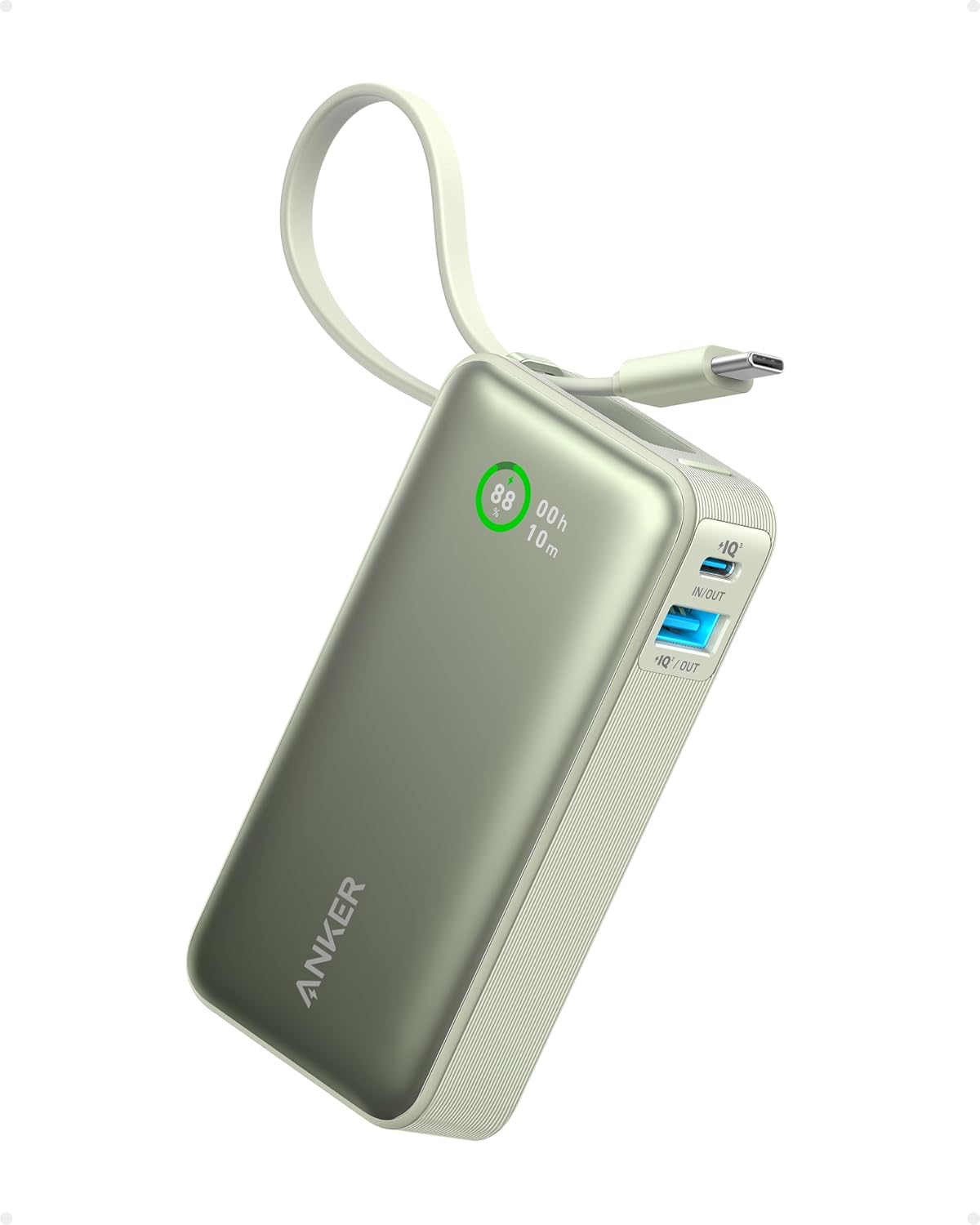
A 10000 mAh power bank is a good fit for a pocket or a small bag. One example is the Anker Nano 10000 mAh with built-in USB-C cable: the cable is permanently attached to the housing, so you do not have to carry it separately. Another option is the Anker PowerCore 10000 Redux with USB-C and 25 W output, a classic, simple model for a phone.
Magnetic power bank and wireless charger
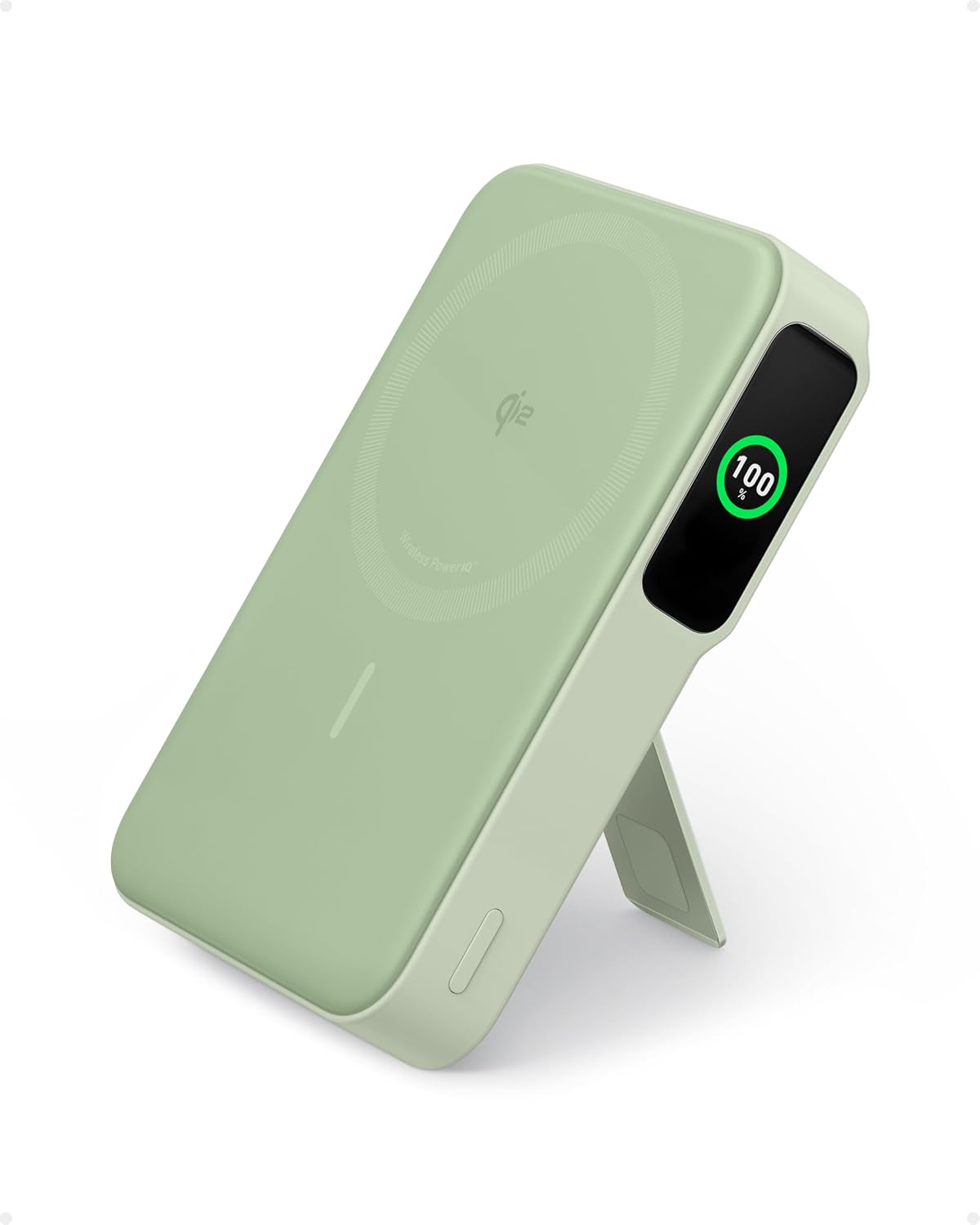
A magnetic power bank attaches to the back of the phone and charges it without a cable, like a wireless charger. The Qi2 standard uses magnets to align the coils in the right place, which makes charging stable. Examples from our range are the Anker MagGo 10000 mAh Qi2 with display and the Anker Zolo 10000 mAh 30 W with stand, which lets you prop the phone up on a desk. Check whether your phone supports magnetic charging. You will find other cable-free solutions in the wireless chargers section.
Laptop power bank
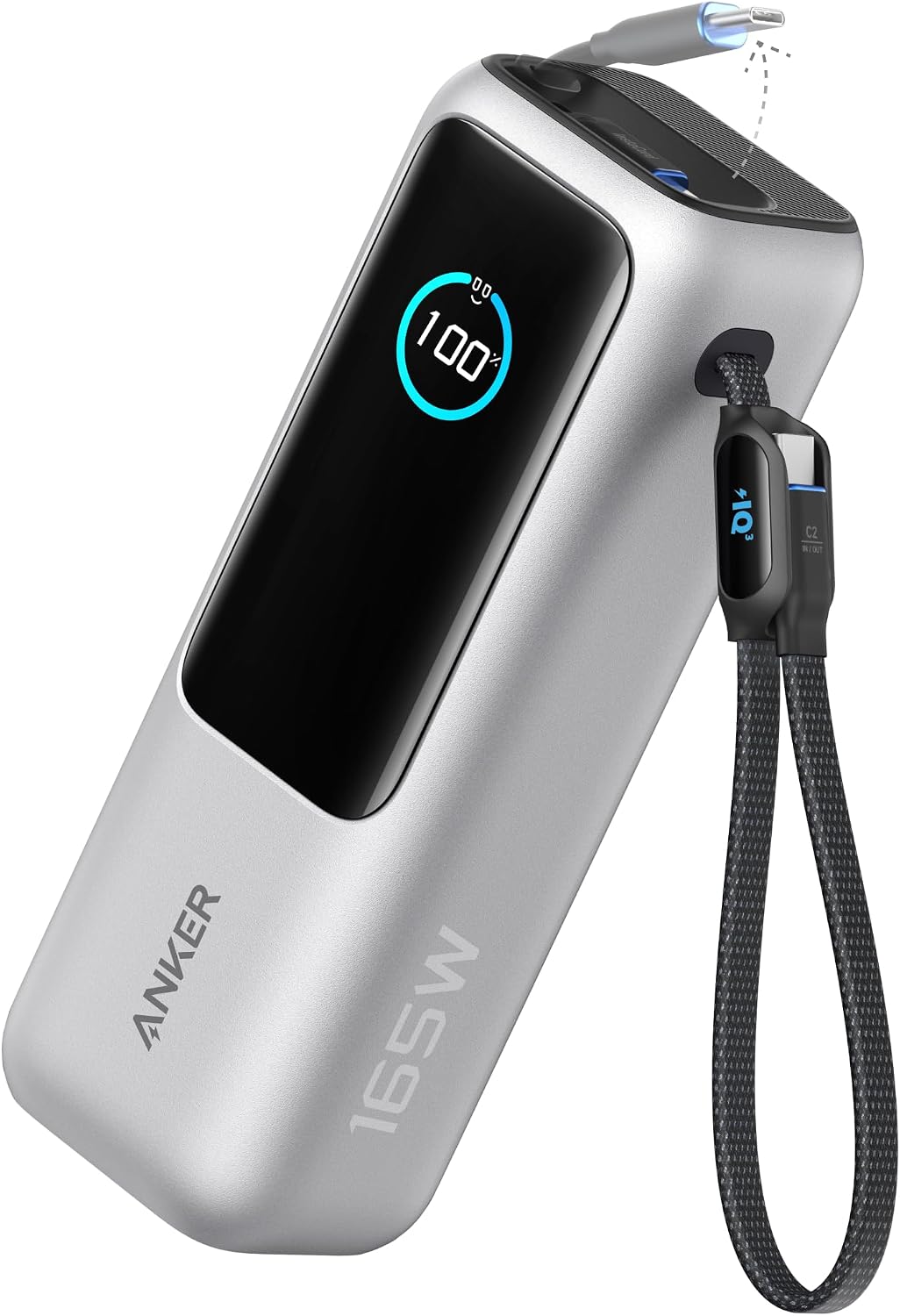
A laptop needs more power and capacity. A laptop power bank usually has at least 20000 mAh and a USB-C output of several dozen watts. In the store you will find, among others, the Anker 25000 mAh 165 W with retractable cable, the UGREEN Nexode 20000 mAh 45 W with built-in cable, and the larger Anker Prime 27650 mAh 250 W and Anker Prime 26250 mAh 300 W with base and display. Such models charge several devices at once, but they are heavier, so they suit a backpack better than a pocket.
Solar power bank – when does it make sense?
A solar power bank tops itself up from a panel, so it is useful on trips and camping where there is no mains power. Remember, though, that small panels charge slowly and work best in full sun. Treat them as a supplement, not the main source of energy. Options include the SilverCrest SPBS 5000 B2 5000 mAh and the DODOCOOL 12 W solar mat with 10000 mAh power bank. For large capacity and several USB-C ports, the JIGA 30000 mAh with three USB-C ports can also be practical.
What to check before buying
- Type and number of ports – USB-C for modern devices, USB-A for older cables; several ports let you charge two devices at once.
- Power when charging several devices – the manufacturer states the total power, and when two devices are connected it is usually split between them.
- Cable included or built in – convenient when travelling, but a good USB-C cable always comes in handy anyway.
- Weight and size – the larger the capacity, the heavier the power bank; choose the one you will actually use.
- Display – shows the charge level and power, which makes it easier to plan your day on the road.
How to look after a power bank
Lithium-ion cells do not like heat or deep discharge. Do not leave a power bank in a hot car, and charge it at least once every few months if it sits in a drawer. To charge the power bank itself, use a good charger; you will find a selection in the mains chargers and car chargers categories.
Frequently asked questions
Is a 10000 mAh power bank enough for a weekend?
If you use your phone moderately and charge only one device, usually yes. If you also take headphones, a watch and a tablet, consider 20000 mAh.
Can you charge a laptop with a regular power bank?
Only if the power bank has a USB-C output of sufficient power and the laptop charges over USB-C. Check the charger requirements in the laptop manual and compare them with the power bank's output.
Which power bank should I choose for air travel?
One whose energy fits within the airline's limits, most often up to 100 Wh. A power bank travels in carry-on luggage, not checked baggage. You will find all models in the power banks category.
Post comments (0)