
 Culture and entertainment
 Supermarket
 Business and services
 Collectibles and art
 Home & garden
 Kids
 Electronics
 Computers
 Automotive
 Tools
 Fashion
 Sports & travel
 Phones & accessories
 Health & beauty
In the workshop and at home we very often face the same question: what to drill with, what to drive screws with and what to buy for breaking into concrete? A cordless drill driver, an SDS-Plus rotary hammer and an impact wrench look similar, but they have completely different jobs. We explain how they differ, what volts, joules and newton-metres mean and how to choose cordless tools.
Cordless drill driver – the everyday tool
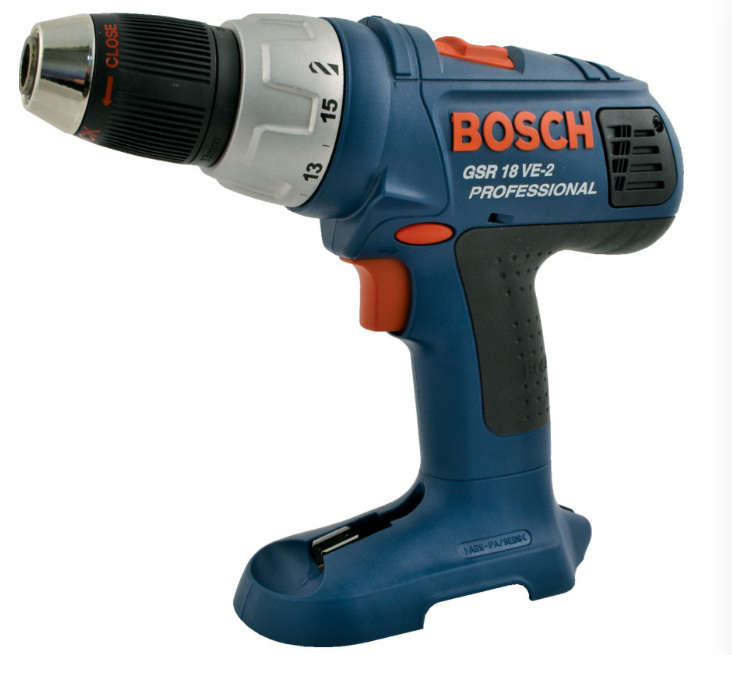
A drill driver is the most versatile hand tool. It drills in wood, metal and plastics, and with the right bit it drives screws. The most important part is the clutch, that is the torque adjustment, which protects against stripping the screw head and damaging the material. Two gears let you choose fast drilling or stronger driving.
In our range you will find models from various brands, for example the Bosch GSR 18 VE-2 18 V with battery and charger, the DeWalt DC987 18 V and the Parkside PABS 20-Li D4 20 V 2 Ah. A wider selection is in the cordless screwdrivers category.
SDS-Plus rotary hammer – for concrete and brick
A rotary hammer combines rotation with percussion, so it copes with concrete, brick and stone where an ordinary drill gives up. The SDS-Plus chuck lets you change bits quickly and transmits the impact more effectively. When choosing, look at the single-blow energy in joules: the DeWalt models in our range have from about 1.4 J to 3.5 J in the SDS-Plus class, while heavier SDS-Max hammers reach 6 J and more.
Cordless or mains-powered?
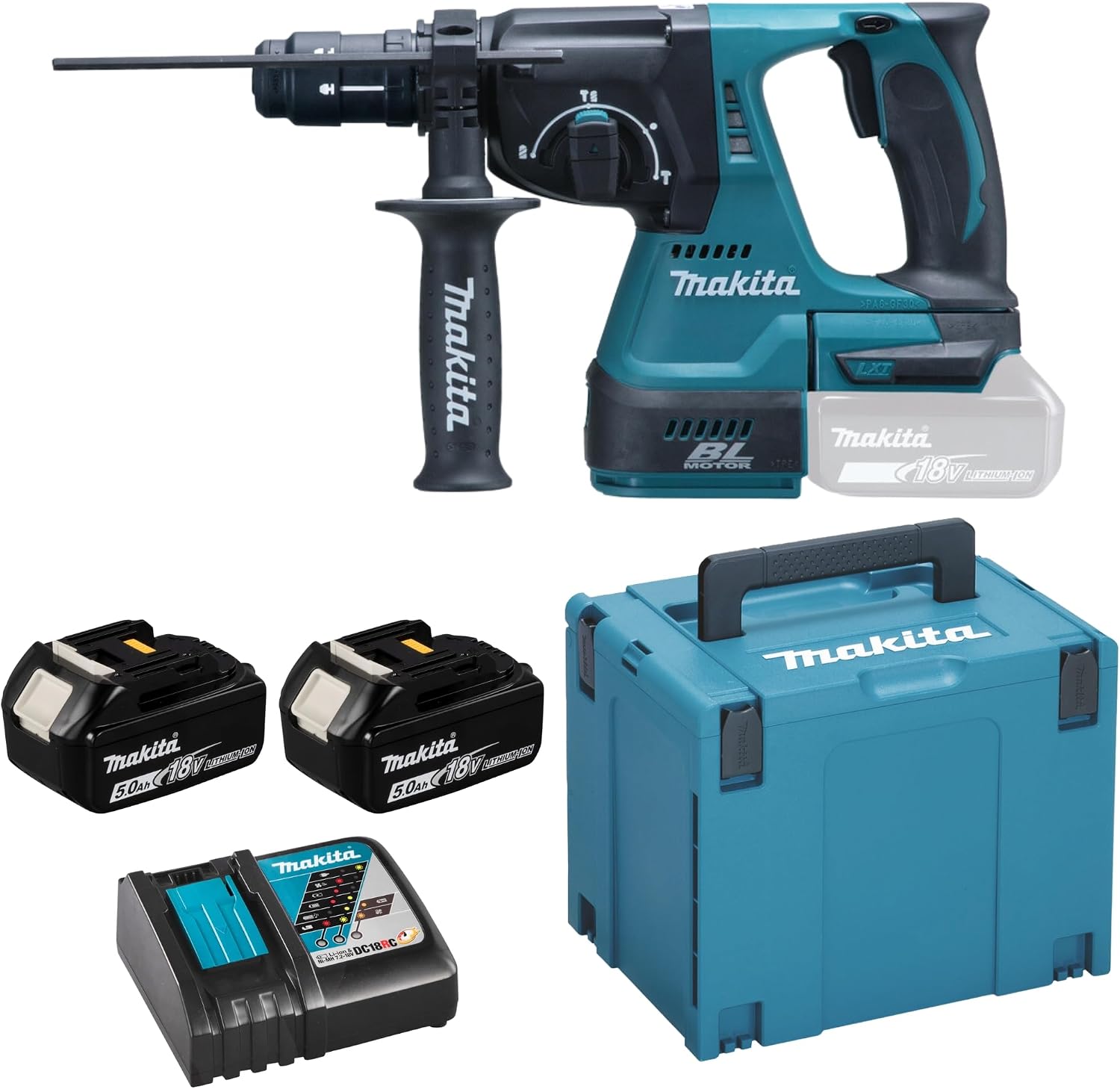
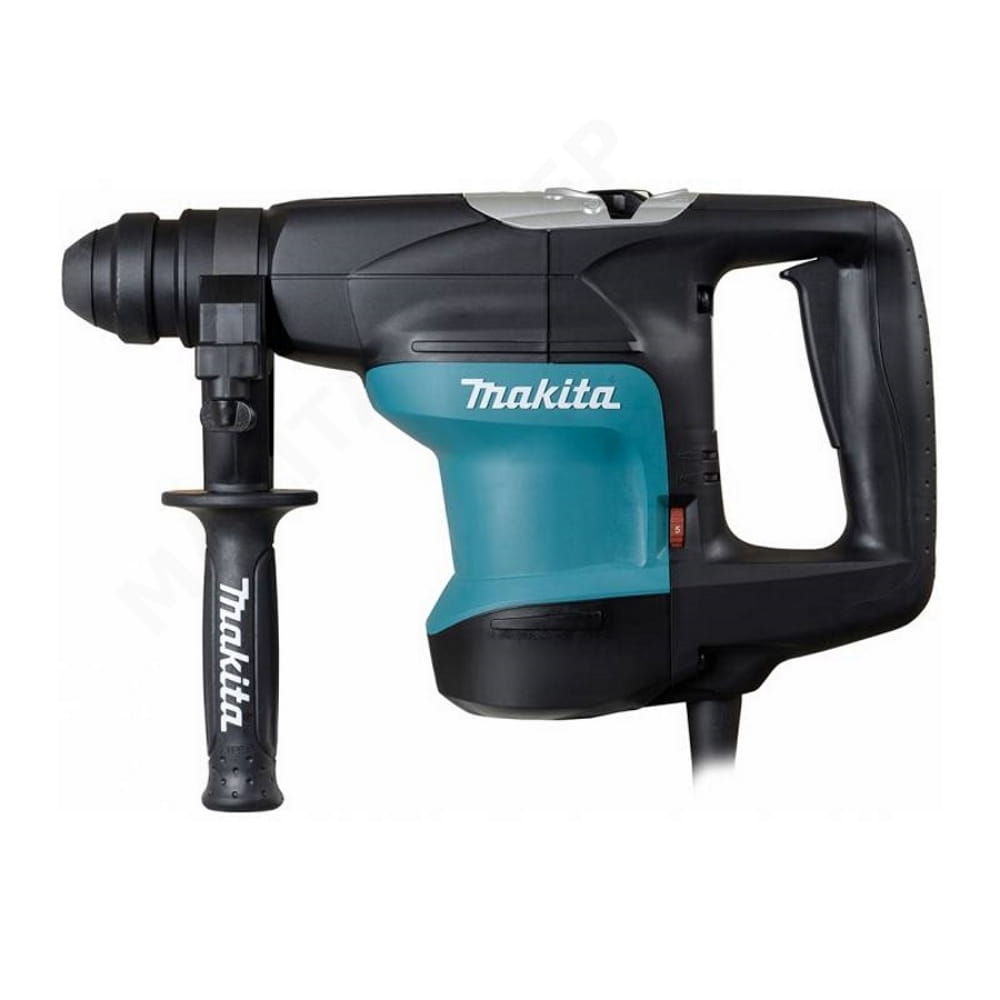
A cordless rotary hammer gives you freedom on a building site with no socket, for example the DeWalt DCH273N 18 V XR, the Makita DHR243RTJ 18 V LXT with two 5.0 Ah batteries or the DeWalt DCH333NT FlexVolt 54 V. A mains model has constant power and needs no charging, like the Makita HR3200C 850 W. For heavy chiselling and drilling in thick concrete there is the DeWalt D25481K SDS-Max 1050 W 6.1 J. The selection is in the rotary hammers category.
Impact wrench – for wheels and strong bolts
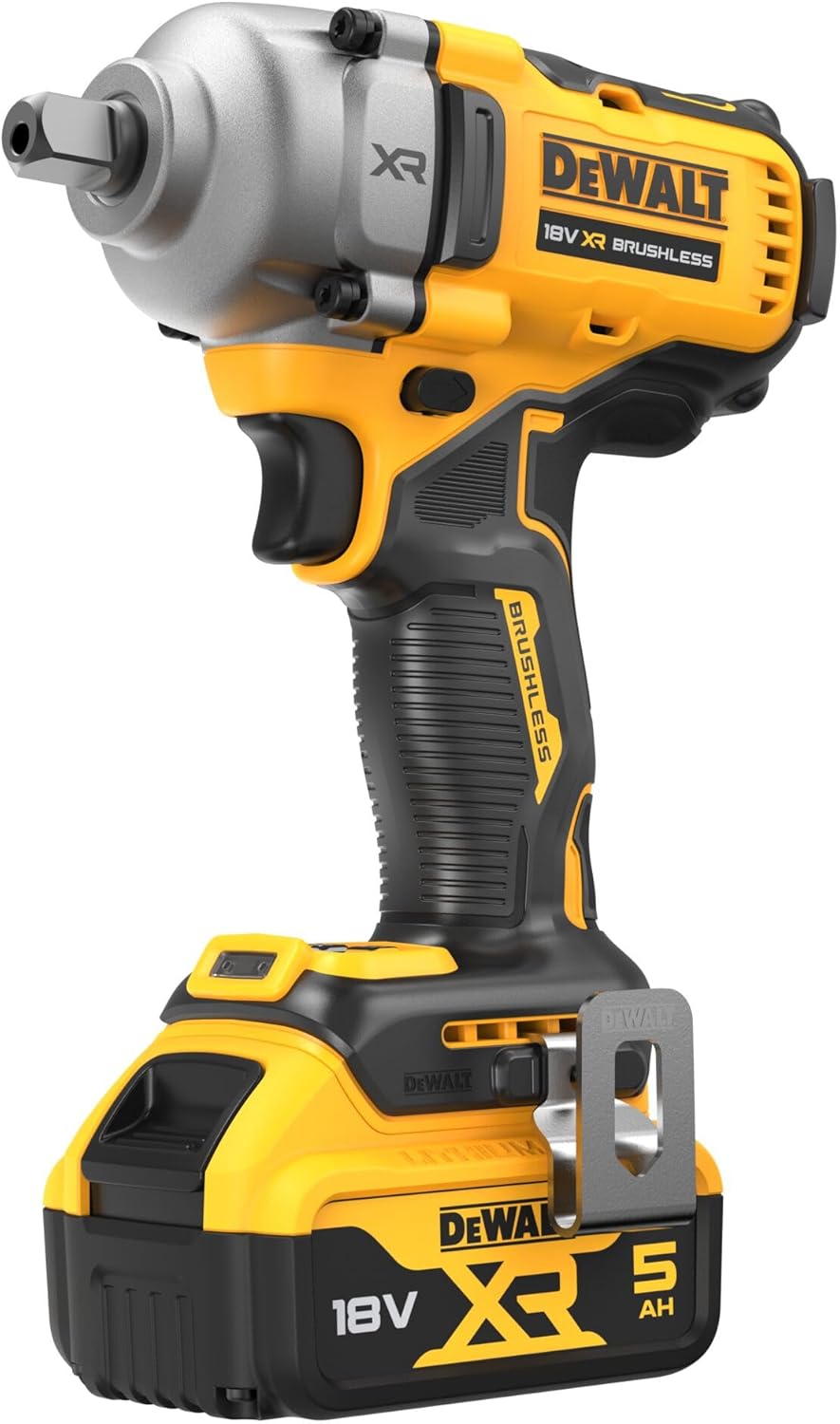
An impact wrench, also called an impact driver, is used to loosen and tighten large bolts and nuts, for example car wheels. The key value is torque in newton-metres (Nm). The 1/2 inch models in our range include the DeWalt DCF892P2T 813 Nm with two 5 Ah batteries and the DeWalt DCF899NT 950 Nm. For smaller jobs the lighter Milwaukee M18 C18 IW 1/2 inch is enough. Full selection: impact drivers.
Remember that an impact wrench is not for precise tightening to a set torque. For wheels and parts where the manufacturer specifies a value, finish with a torque wrench.
Voltage, amp-hours and the battery system
A voltage of 12 V means light tools for the home, 18 V is the standard for most jobs, and 54 V (FlexVolt) or higher is meant for heavy-duty work. Battery capacity is given in Ah: 2 Ah is enough for short jobs, and 5 Ah for a longer day. Batteries usually fit only tools from the same manufacturer's system, so choose the brand you want to build your set around. A "without battery" description means you are buying the bare tool. The store also has power tool batteries and grinders and polishers, which can be powered from the same system.
How to match the tool to the job?
- Shelves, furniture, assembly – a 12–18 V drill driver.
- Plugs in concrete and brick – an SDS-Plus rotary hammer.
- Chiselling and large holes – an SDS-Max hammer.
- Wheels, large bolts, structures – an impact wrench.
18V cordless tools – what else is worth knowing?
18V cordless tools have become the standard because they combine power with mobility. In the description of many models you will find the word "brushless", which means a motor without carbon brushes. Such a design is usually more efficient, wears less and needs less maintenance than a brushed motor. A cordless screwdriver with this kind of drive makes better use of the battery's energy, which translates into longer run time.
Pay attention to the weight of the tool. When working overhead, a heavy rotary hammer quickly tires you, while a light screwdriver lets you work for a long time. Also check whether a case is included, because proper storage protects the tool and the bits. Sets marked TSTAK or Makpac let you stack cases on top of each other, which makes transport easier. Do not forget accessories: concrete bits, screwdriver bits and impact sockets should match the jobs, because ordinary sockets can crack in an impact wrench. For the wrench, use impact sockets, the black ones made of the appropriate steel.
An impact driver generates a lot of noise and vibration, so wear hearing protection, and in dusty conditions put on goggles and a mask. Do not tighten bolts with it without control, because high torque can strip the thread.
Frequently asked questions
Is an ordinary drill driver enough for concrete?
For a small hole in brick, yes, if it has a hammer mode. In concrete a rotary hammer works faster and more accurately.
Will an impact wrench drive ordinary screws?
For screws in wood a screwdriver is better. An impact wrench delivers a lot of power but lacks the precision of a clutch.
Post comments (0)